
Sources for Peabody Previous Residents
The backward trail begins with the source that fits the era and question. An assessor parcel gives the current owner and identifier. The Essex South Registry can connect that owner to an earlier transfer. Street and house directories may place a household at an address, while census schedules add household composition for released census years. Sutton Room holdings add older assessor, valuation, street-list, voter, newspaper, and municipal records. None supplies a complete record of every person who ever stayed at an address, but together they can build a dated history.
| Source | Years It Covers | Where Held | What It Shows |
|---|---|---|---|
| Recorded land images and index books | Images 1640-current; electronic index strongest from 1951 | Essex South Registry | Transfers, parties, legal descriptions, book/page |
| Peabody street directories | 1859-current holding statement | Peabody Institute Library, Sutton Room, and microfilm | Address-to-occupant or name-to-address entries, depending on volume |
| City street lists and voter records | Street lists 1891-1966; voter lists 1877-1974 | Sutton Room | Historical address and local registration context |
| Assessor and valuation papers | Assessor records 1856-1893; valuation records 1861-1922 | Sutton Room | Historic property and valuation evidence |
| Released federal census schedules | 1870-1950 schedules used for pairing; 72-year release rule | National Archives and library research sources | Household composition and birthplace details |
Begin with the most recent solid address, then work backward one document or publication at a time. A gap in one source is a reason to switch channels, not to substitute a guess.
Peabody Parcel Start
For a Peabody address, MapGeo and the supporting ArcGIS parcel layer establish the present parcel before historic work begins. MapGeo offers a visible Property Quick Search and mapped parcel navigation. The documented ArcGIS fields include OWNER or OWNER1, OWN_ADDR or ADDRESS, OWN_CITY, OWN_ZIP, MAP_PAR_ID, and parcel geometry. Record the situs address and map/parcel ID together. The owner mailing address is a tax-correspondence field, so it may differ from the parcel location and is not proof of who lived in the building.
Write down the legal description or plan reference when a deed provides one. Older Peabody documents may identify a lot, farm, former street name, plan, or abutting owner instead of the house number used today. That detail is the bridge from the current map to older Registry books and plans. MapGeo reports parcel and FY2026 property data updated in January 2026; verify an important current detail with the assessor.
Peabody Deed Chain Backward
A chain of title is a sequence of ownership documents, not a list of past residents. It is still the most reliable backbone for a house history because a purchase deed names a buyer and seller and normally ties the transaction to a parcel. The Essex South Registry address search accepts street number, street name, a date range, town, and optional document type. The Registry directs searchers to omit the street suffix and use the primary number for a range. Use the current owner as the first name search if the address search does not locate the needed transfer.
- Find the current mapped parcel in MapGeo and save the situs address, owner field, map/parcel ID, and any legal-description clue.
- Search the address in the Registry’s recorded-land index, beginning with a practical recent date range and Peabody as the town.
- Open the relevant purchase document. Record the grantee, the grantor, document type, date, and book/page or document number.
- Search that seller as a grantee in an earlier period to locate the seller’s own acquisition. Repeat the same documented steps backward.
- When the address disappears, use the legal description, lot, plan, subdivision, or abutting-owner details. Move to the older image-index books when electronic indexing is incomplete.
- Grantor
- The party transferring an interest in a deed.
- Grantee
- The party receiving that interest. Searching a prior grantor as a later grantee can reveal the earlier purchase.
- Chain of title
- The documented sequence of transfers connected to one parcel or legal description.
- Legal description
- The deed or plan language that identifies land by lot, boundary, plan, or other record reference when a street number fails.
Note: Record both the index citation and the document date because a filing date and a transfer date can serve different research purposes.
Peabody Registry Index Books
The Registry’s classic street shortcut begins in 1995 and includes only Deeds and Conveyance documents. It is not the full historic route. Recorded-land images run from 1640 to the present, while the Registry says electronic indexing is strongest from 1951 forward. For material before 1979, electronic indexes can be incomplete or absent. The older image-index bands are 1640-1799, 1800-1854, 1855-1950, 1951-1963, and 1964-1978.
The Essex South Registry classic search displays the coverage periods, recorded/registered land options, and street-search limitations behind this part of a house-history search.
When an index jump lands close to a surname, inspect adjacent pages rather than stopping at the first result. Registered Land has its own certificate and document-number method, so its records may not appear under the recorded-land book/page path.
Peabody Past Residents Name Bridge
Before treating an old address as a numbering problem, check the town name in use. South Danvers separated from Danvers and incorporated in 1855. The town adopted the Peabody name in 1868 and became a city in 1916. Earlier material can be filed under Salem-related jurisdictions. A search for who lived here before may need Salem, Danvers, South Danvers, and Peabody as separate terms.
No official Peabody street-renumbering schedule or renamed-street schedule was verified in the research. Use historic maps, Registry plans, the current assessor map, and library directories to test a suspected connection. Do not state that an old number became a current number unless a plan or another record proves it. This municipal-name bridge is often the safer explanation for a missing early address.
Peabody Past Households in Sequence
Owners are only part of the picture. The Peabody Institute Library states that its street-directory holdings run from 1859 to the present, with Peabody on microfilm. A house or street directory can be arranged by address, while other volumes are name-arranged, so check the title and the volume itself before drawing a conclusion. Sutton Room staff, the microfilm reader, the archive catalog, and local-history appointments are the local channels for working through the collection. The historical books are discussed in the Peabody city directory collections.
The Peabody Institute Library local-history page describes the Sutton Room, its research access, and the local record collections used to place households over time.

The Sutton Room offers a local fallback when a current web index reaches an older address gap. Its holdings include city records, maps, church materials, newspapers, and local-history files as well as the directory run.
- Locate a household or address in a directory volume and preserve the title and year with the transcription.
- Check the nearest released federal census schedule for the household composition and birthplace details.
- Use the next available directory to test whether the address, occupation, spouse notation, or household marking changed.
- Use a deed, newspaper, marriage-intention, probate, or cemetery clue to explain a move, death, or transfer.
The 1890 federal census loss creates a real gap. Pairing 1870, 1880, 1900, 1910, 1920, 1930, 1940, and 1950 schedules with directories is more reliable than assuming one annual entry tells the whole story.
Peabody Historic Paper Trails
Several Sutton Room record groups can fill a break in a deed or directory trail. Its City of Peabody collection spans 1796-2015. The collection guide lists assessor records for 1856-1893, valuation records for 1861-1922, street lists of polls for 1891-1966, voter registration lists for 1877-1974, and municipal reports. Those records are historical context, not a current resident roster. A request or appointment should name the address, approximate period, and record type rather than ask for a newly assembled list.
Sanborn maps are another address tool. A digitized Peabody Sanborn item is held by the Library of Congress, and maps, property atlases, permits, deeds, and newspapers can help date a structure or explain a parcel change. Peabody’s industrial history can also explain why a present parcel does not resemble an older use. Use the map as physical context and the directory or deed for the named party.
Peabody Archive Endpoints
When an occupant vanishes from a directory, the next record may be a newspaper notice, probate file, vital record, or cemetery record. Peabody Institute Library’s newspaper archive begins in 1844. Its July 1979-current collection is available only on a library computer because of copyright, while older material may be on microfilm or another listed source. Search a person’s name with an address, spouse, funeral home, or neighborhood, then confirm a finding with the record custodian. Obituaries are a research path, not a separate verified online index.
The Peabody Historical Society cemetery guide explains the historic guide and the split between historical records and current custodians.
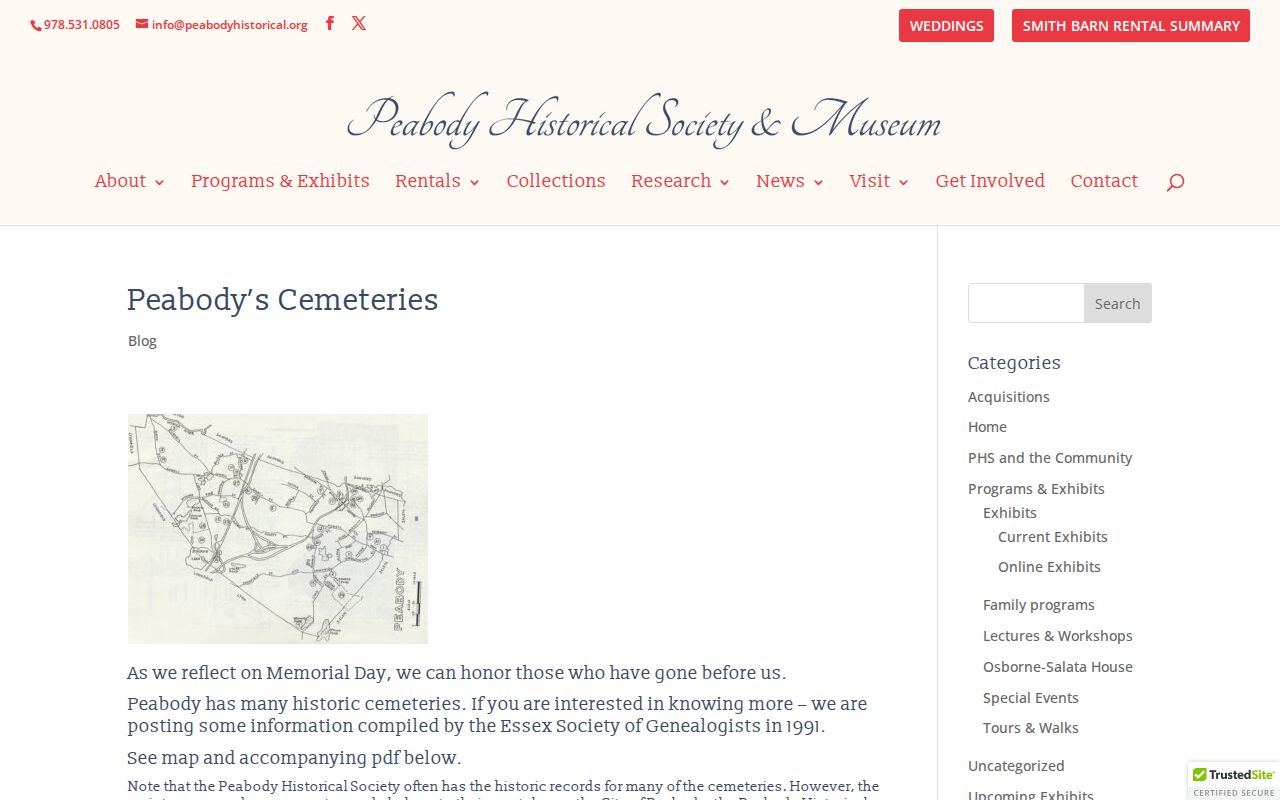
The Historical Society may hold historic cemetery records, while recent maintenance or interment information can be held by the City, Historical Commission, or a religious caretaker. No official citywide searchable current interment database was located during the research.
For estate questions, Essex Probate and Family Court in Salem serves Essex County. Its estate and administration dockets are searchable on MassCourts for 2009-present, and older probate materials are held through the Massachusetts Archives and Probate Archives. An executor or heir name can help identify the record trail after a death, but it does not by itself prove residence at the address.
Limits on Peabody Previous Residents
A previous-resident search has boundaries. A deed follows title, not everyone in a household. A parcel owner’s mailing address is not a residence finding. A directory entry is tied to its publication year and may use abbreviations or a name arrangement that needs direct checking. Public records may omit confidential voters, protected addresses, sealed material, and legally exempt information. The research did not identify a verified street-renumbering schedule or a citywide current interment database, so those gaps should remain part of the answer.
Keep a source log with the address form used, municipality name, document citation, date range, and result. That record of the search makes it possible to distinguish a verified past household from a promising lead and to return to the proper custodian for confirmation.