
Peabody Resident Lookup Coverage
A reliable Peabody records search uses each source for the question it can actually answer. MapGeo and its supporting parcel layer can connect an owner name with a parcel, meaning one mapped property unit, and tax mailing fields. The annual street list may show a person reported at an address on January 1, subject to access rules. Court and probate indexes can identify a party or estate role. Vital records can confirm an event only through the appropriate custodian and eligibility process. A name match is a starting point, not an identity decision.
| Record | What It Confirms | Where | Access |
|---|---|---|---|
| Parcel record | Ownership and tax mailing fields tied to a parcel | Peabody MapGeo | Public viewer, then assessor verification |
| Annual street list | A person reported at a Peabody address on January 1 | Peabody City Clerk | Request or inspection, with privacy rules |
| Court docket | Party name, case status, and disposition details | MassCourts and court clerk | Online access varies; official file comes from the custodian |
| Vital event record | A birth, death, or marriage event within the right custody rule | City Clerk, RVRS, or State Archives | Eligibility and copy rules apply |
| Registry index | Recorded property documents and parties | Essex South Registry | Public index; image access can differ |
| License or filing | Public professional or entity affiliation | State licensing and corporations offices | Free official search tools |
Start with a full legal name plus a second detail such as a middle initial, a Peabody ZIP, a past address, or an approximate year. If the goal is ownership, use the parcel and Registry path. If the goal is an estate connection, begin with Probate and Family Court. For an event record, start with the City Clerk only when the local filing rule fits. This keeps the search tied to the right record rather than to a broad, uncertain name match.
Peabody Court Record Fields
The statewide court system has Name, Case Type, Case Number, and Ticket or Citation Number tabs. For a name search, the instructions require a court department and division, with court location appearing as needed. The Last Name field is used for civil cases and needs at least two characters in the required capitalization pattern. A case-number search needs the exact capitalization, spaces, and leading zeros. Criminal matters are often available online only by docket number, so the court division and case number matter as much as the party name.
| MassCourts result field | What it identifies |
|---|---|
| Party name | The party listed in the matter, not proof that two matching names are the same person |
| Case or docket number | The identifier needed to distinguish matters and, often, locate criminal information |
| Department, division, location | The court context for the result, including Peabody District Court where applicable |
| Case type and filing date | The category and timing of the matter |
| Docket events and disposition | Recorded activity and the reported outcome, subject to case and court differences |
| Case-detail links or images | Available material that varies by department; Probate and Family remote images are restricted |
Massachusetts court-search instructions show the tabs, fields, and official-record warning used when matching a Peabody court record.
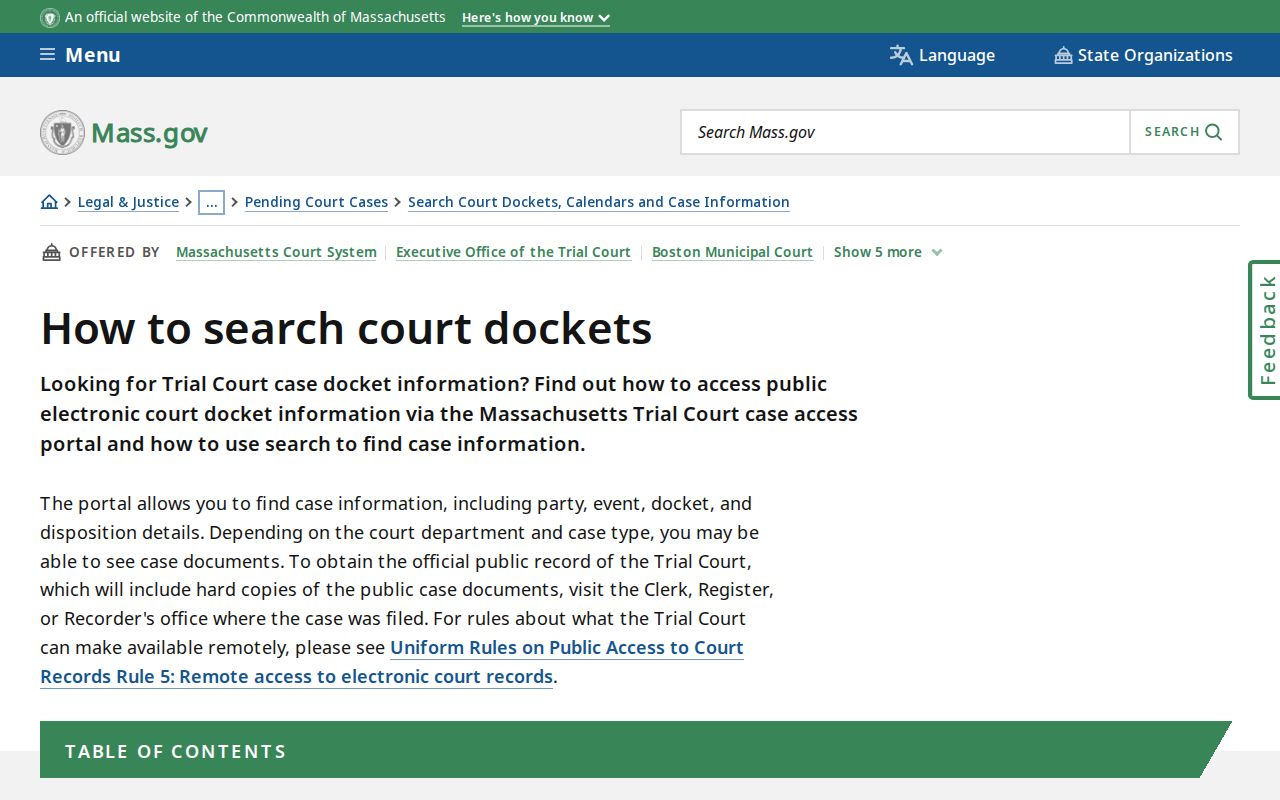
The form makes a disciplined search possible, but its result must still be matched to court, date, and another identifier.
The MassCourts public-search entry also displays the anti-robot check and states that online information is not the official court record.
For the official public file, request copies from the clerk or register where the case was filed. Public terminals at courthouses and Registry sites can provide access that is not available remotely.
Note: A public docket entry does not establish identity, responsibility, or the most current court activity without custodian verification.
Verifying Peabody Resident Records
Use two independent custodians and a time detail before deciding that records concern the same person. A parcel record can be an ownership and mailing-address clue, but the owner may not live at the mapped parcel. A deed can establish a recorded transfer, not household membership. Names also vary across older Peabody material, which may use South Danvers, an abbreviated name, an anglicized spelling, a married name, or a widow notation. The sequence below keeps the verification task narrow and traceable.
- Anchor the name to a Peabody address, parcel, former address, approximate year, or middle initial. Record the source and date rather than relying on memory.
- Check MapGeo for the mapped parcel and tax mailing fields, then use the Registry index to confirm a relevant ownership document.
- Run MassCourts only for a matching court category and location. Compare the docket number, date, party role, and event details rather than matching only on a name.
- Use a vital record or probate file only when the event, relationship, and eligibility rules fit. Obtain a certified copy from the custodian when the matter requires one.
- For a common name, require a second custodian plus a time or relationship detail before treating the result as a match.
- Docket
- A court's running record of filings, events, and entries in a case.
- Index versus image
- An index points to a record or document. An image is the underlying scanned record, and its access can be more limited.
- Certified copy
- A copy issued and authenticated by the record custodian for uses that require an official copy.
When the question shifts from one person to the ownership pattern on a street, the Peabody street directory follows the address chain without treating ownership as occupancy.
Peabody Vital Record Paths
The Peabody City Clerk issues certified birth, death, and marriage records when its local filing rules apply. A birth may be on file if the child was born in Peabody or the parents lived there at birth. A marriage may be on file if the parties filed their intention in Peabody. A death may be on file if the person died in Peabody or lived there at death. Requests can be made in person, by mail, or through the city Online Payment Center. The local instruction lists a $10 fee for each certified copy and asks for the party name, event date, and requester contact information.
State ordering is the fallback when the local event or residence rule does not fit. The state form asks for the subject name, event date and place, photo identification, and sometimes relationship, guardianship, representation, or court documentation. Pre-adoption records, some unwed-parent records, and death records containing Social Security information have special restrictions. Massachusetts places practical genealogy access at more than 90 years for births and marriages and more than 50 years for deaths. The State Archives holds 1841-1935 research records, while RVRS handles 1936-present records.
Massachusetts vital-record ordering instructions show the state identity and eligibility requirements.
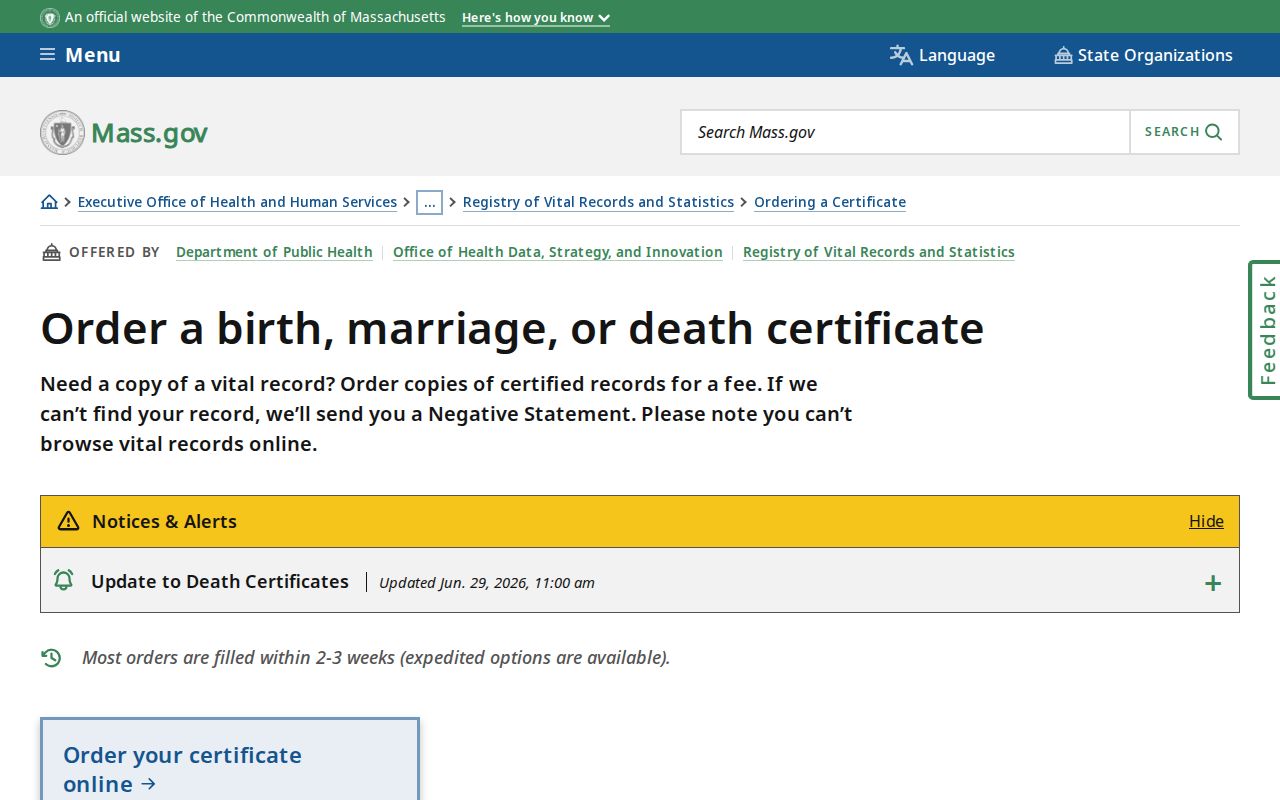
That application is a record-request route, not a general name directory. It should be used only for an event and a requester who meet the listed rules.
Peabody Probate Record Trails
Estate work can supply a useful family or executor connection when a Peabody resident has died. Essex Probate and Family Court in Salem holds probate and family files. MassCourts covers estate dockets from 2009 forward, while older records can require archive research. Public filings may identify a decedent, executor, heir, attorney, or address. Those details still need confirmation through the estate, a death record when eligible, and a deed or other independently held record.
This is a human-use trail, not a shortcut to a private address. Start with a known decedent or case number, identify the court and docket, and request the official public filing when needed. A later Registry search can show whether a public property document relates to the same estate. The Massachusetts Treasurer's unclaimed-property search can be another estate clue, but a claim requires proof and does not show current residence.
Massachusetts DOC's custody-locator instructions describe a separate, status-specific search that uses a full name or commitment number.
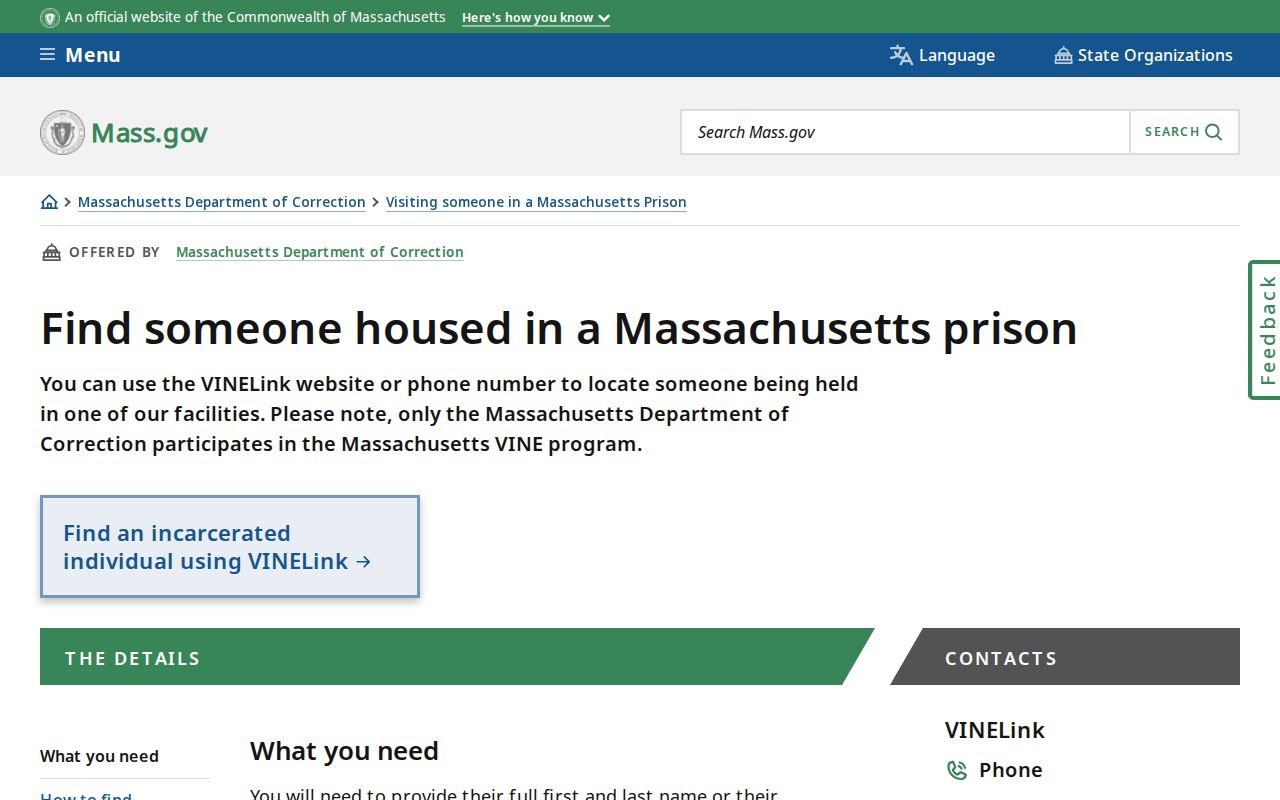
Custody information is not part of routine identity verification. Use the official route only for its stated purpose and do not turn a status result into a claim about a person's identity or location.
Peabody Voter Record Limits
Massachusetts has a personal voter-status tool, not a general public people search. It requires first name, last name, birth month, day, and year, plus the five-digit ZIP where the voter is qualified to vote. The user must also acknowledge an individual-voter-use statement. State search tips say to use the name given at registration, try an old ZIP after a recent move, and allow two to three weeks for a new registration to appear. A failed result can be taken to the local elections office.
Central voter names and addresses are not a public record under M.G.L. c. 51, §47C. The Peabody annual street list is different from that personal portal and may be requested or inspected as an existing city record, subject to confidentiality limits. Protected voters are withheld. Do not use either source to promise a current resident list.
The Secretary of the Commonwealth voter-status form displays the required identity fields and individual-use acknowledgement.
The form's design shows why a name alone is too weak for single-person verification and why the tool belongs to the individual voter.
Note: Historical voter lists held by the Sutton Room document past Peabody residents, not a person's current registration status.
Peabody License Record Affiliations
State filings can corroborate a public affiliation without being used as an address directory. The Corporations Division searches entity name, individual officer or director name, nine-digit identification number, or filing number. Its filings can include organizational articles, annual reports, dissolution certificates, and related documents. The Division of Occupational Licensure has Individual and Business modes with first, middle, and last name, city, state, ZIP, board, license type, and license number fields. Search results can lead to a public license summary.
Match the role, entity, city, and filing date to the person already established through another source. A professional or corporate record may reflect a business location or a filing contact, not a person's home. Peabody's local permit and license material is handled through the City Clerk, City Council, and Inspectional Services, but research did not locate one searchable local name register for every category. Ask the appropriate city custodian for an existing public record rather than assuming an unlisted database exists.
Peabody Property Record Alerts
A deed result can lead to a record-safety check for an owner or estate. The Registry's free consumer notification system can alert a subscriber when a document is recorded under a monitored name. An alert is notice of a filing, not a court decision and not proof of fraud. If an unfamiliar document appears, obtain the official document number, date, and image from the Essex South Registry before drawing conclusions. The Registry, rather than a third party, can explain the current copy route and local record context.
The Massachusetts Registry property-alert page explains the official notification service used by the Essex South Registry.

For a Peabody parcel record, this alert is a verification aid after a document is identified, not a substitute for reading the Registry document.
Correcting Peabody Record Errors
Send an inaccurate city record to the custodian that maintains it, such as the City Clerk, Assessor, or Inspectional Services. Court instructions include a Request for Correction process that can be emailed to the relevant court department or delivered by mail or in person. For a public-record denial, ask for the exemption basis in writing and appeal through the Supervisor of Records under 950 CMR 32.00. Massachusetts Public Records Law, M.G.L. c. 66, §10, generally calls for an initial response within 10 business days, but the custodian may need to review exemptions or redact protected material.
Keep the record name, document or docket number, date, and written response together. That creates a correction trail based on the original custodian, rather than on an unsourced profile or a copy that may be stale.
Peabody Resident Lookup Limits
Some information is intentionally unavailable. RMV personal information is protected under federal and state rules. Massachusetts Address Confidentiality Program participants can use a substitute address, and confidential voter registration can keep a name and residence off street lists and annual registers. Courts can impound qualifying records or substitute an address. Juvenile, sealed, expunged, impounded, adoption, and confidential family records are not routine public name-search material. Utility and delivery records are not public resident evidence.
Commercial neighbor or people data can be stale, mismatched, or built from unrelated former records. Official custodians remain the better route for a document question, a correction, family history, civic transparency, or an estate matter. Stop when a record is restricted, and never infer a household member from an owner or mailing field.
Lawful use. Use Peabody resident records for personal, lawful research such as family history, an estate matter, or civic questions. Massachusetts law prohibits using public information to stalk, harass, intimidate, or harm another person.